
Written by: Kai Eldridge, Music Discovery Editor, OnesToWatch | Last updated: August 8, 2026
Key Takeaways
- Gen Z follows a repeatable six-step loop for music discovery that runs from short-form video to live shows.
- 82% of Gen Z find new artists via social media, and 51% name TikTok as a primary discovery source.
- Human curation from platforms like OnesToWatch adds the story and context algorithms miss, which sustains fandom.
- Discord and Reddit communities give Gen Z fans intimate spaces to build identity and belonging beyond algorithmic feeds.
- Live events lock in loyalty, with Gen Z spending an average of $101 monthly on concerts while OnesToWatch maps where that culture is headed.
How Gen Z’s Six-Step Discovery Loop Works
82% of Gen Z discover new artists through social media or user-generated video sites, according to Deloitte's 2024 Digital Media Trends survey. 68% of social media users specifically credit short-form video as their discovery channel (MusicWatch via DAC Group), and 51% of Gen Z listeners aged 16–24 name TikTok as a primary discovery source (MIDiA Research, 2026).
This behavior maps to a six-step loop that repeats with every new artist.
- Trigger: A short-form video clip surfaces an unfamiliar track on TikTok, Instagram Reels, or YouTube Shorts.
- Curiosity detour: The listener searches the artist's name, explores their catalog, and reads comment discussions.
- Peer amplification: Friends share the track, add it to collaborative playlists, or post their own reaction videos.
- Human-curated validation: A trusted editorial source, such as OnesToWatch, features the artist and adds credibility plus narrative depth.
- Community entry: The listener joins a Discord server, Reddit thread, or fan group to talk about the artist with others.
- Live conversion: Digital fandom turns into concert attendance, which cements long-term loyalty.
See how this loop plays out in real time on OnesToWatch’s latest artist spotlights.
For a snapshot of who is breaking through this loop right now, explore OnesToWatch's Top Artists To Watch in 2026.
Why Algorithm Fatigue Pushes Gen Z Beyond Spotify
Gen Z does not abandon Spotify so much as they refuse to stop at algorithmic recommendations. Spotify's Culture Next 2026 report confirms that long-term Gen Z engagement depends on fandom, repeat listening, and cultural participation, not just initial algorithmic exposure. Algorithms surface tracks efficiently, yet they rarely supply the narrative context that turns a stream into part of someone’s identity.
Peer-driven platforms fill that gap. SoundCloud's 2026 Music Intelligence Report shows that listeners who discover tracks through another user's Liked By playlist are three times more likely to engage with that track and three times more likely to explore music outside their most-listened genre compared with algorithm-driven discovery. Meanwhile, MIDiA Research's September 2025 analysis found that viral social-video exposure does not reliably convert into streaming or fandom because listeners sometimes feel they have already heard a song enough on social media before they ever seek it out on a streaming service.
Human curation, the kind practiced by OnesToWatch through analog playlist selection and editorial features, provides the story and context that algorithms structurally cannot. That narrative depth is what transforms casual listeners into the identity-driven fan communities that define Gen Z music culture.
To see how curated storytelling reframes discovery, browse OnesToWatch’s in-depth artist features.
Then compare those stories with the artists highlighted in the 2026 Artists To Watch list.
Gen Z Music Fan Communities as Identity
For Gen Z, fandom functions as identity rather than pastime. As TikTok's creative strategy lead Ankita Shetty noted in Live Nation's 2026 Love Song study: "They don't look at it as a hobby. They look at it as identity. It's literally what forms their culture and community."
Connecting with other fans is a key motivation for Gen Z to remain active in fandoms, with connection to creators ranking second. This emphasis on meaningful connection extends beyond fandom itself, as many Gen Z members prioritize relationships where both individuals contribute to each other's growth. That preference drives a shift toward smaller, intentional online spaces over endless feeds.
Algorithmic feeds deliver volume. Human curation, with its focus on authenticity, live-performance potential, and artist narrative, delivers the emotional anchoring that sustains communities. OnesToWatch has built its editorial pipeline around those qualities, championing counter-trending artists whose stories give fans something to invest in beyond a single viral moment.
Explore how those stories shape real communities in OnesToWatch’s latest community-driven features.
To find identity-building artists early, start with Top Artists To Watch in 2026.
Peer Recommendations Power Fan-Driven Discovery
Word-of-mouth remains the most trusted discovery channel within Gen Z peer networks. Eventbrite's 2026 Social Study found that 69% of 18–35-year-olds rely on personal networks and word-of-mouth to discover events, a pattern that extends naturally to music. Collaborative playlists, shared listening sessions, and fan-made reaction videos all act as peer endorsements that carry more weight than an editorial algorithm.
The Reddit-to-Discord pipeline shows this clearly. A listener encounters an emerging artist in a Reddit thread, such as r/indieheads or a genre-specific subreddit, upvotes the recommendation, and follows a link to the artist's Discord server. Inside that server, listening parties, direct Q&As with the artist, and shared release-day reactions deepen the bond from passive interest to active community membership. OnesToWatch features accelerate this cycle by giving fans a credible, shareable editorial anchor to post in those threads.
See how fans are already doing this by sharing OnesToWatch discovery pieces across Reddit and Discord.
If you build or manage fan spaces, use the artists on the 2026 OnesToWatch list as conversation starters.
TikTok’s Role in Gen Z Music Discovery
As noted earlier, TikTok dominates Gen Z discovery channels, and a substantial share of US music listeners have consumed short-form video on platforms including Meta Reels.
TikTok's discovery mechanic operates in a nonlinear way. Users move between creators, formats, and communities in "curiosity detours" that can carry them from a 15-second hook to an artist's full back catalog within a single session. An artist who posts an acoustic version of a track, a behind-the-scenes studio clip, and a candid response to fan comments creates multiple entry points into the same discovery loop. Each touchpoint becomes a possible gateway to deeper fandom.
This pattern explains why TikTok ignites interest but rarely sustains it on its own, the virality-to-fandom gap identified by MIDiA Research. TikTok sparks the moment, while human-curated platforms like OnesToWatch sustain it by providing the artist narrative that transforms a trending sound into a followed career.
To see which TikTok-driven acts are building beyond a single sound, browse OnesToWatch’s TikTok breakout coverage.
Then track which of those artists appear on the 2026 Artists To Watch list.
How Live Events Cement Gen Z Fandom
Live music is where digital discovery becomes irreversible loyalty. The share of Gen Z attending multiple concerts per year has been increasing, while Gen Z live-event attendees spent an average of $101 monthly on live music in Q1 2026, outpacing Millennials at $94 (Luminate U.S. Music 360).
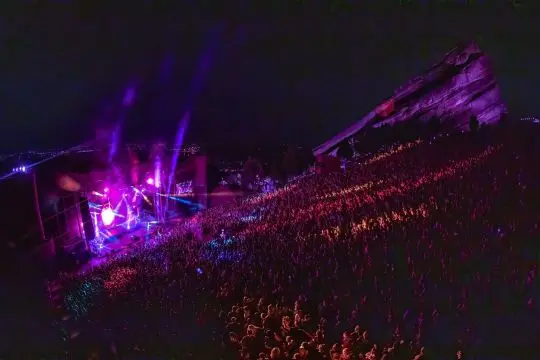
Barriers are falling as well. The share of Gen Z citing ticket cost as a barrier fell from 75% to 57% from Q1 2024 to Q1 2026.
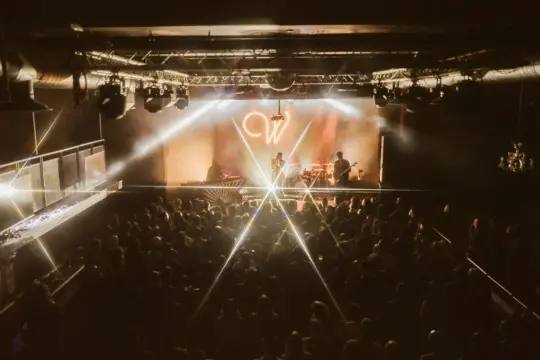
Live Nation's 2026 Love Song study found that nearly 90% of Gen Z are comfortable attending concerts alone, and 96% of Gen Z respondents value pre- and post-event moments as much as the event itself per Live Nation's 2026 Love Song study. The community conversation before and after a show is as important as the set. Artists and labels that activate those moments through Discord countdowns, post-show listening threads, and editorial recaps on platforms like OnesToWatch extend the live-event halo indefinitely.
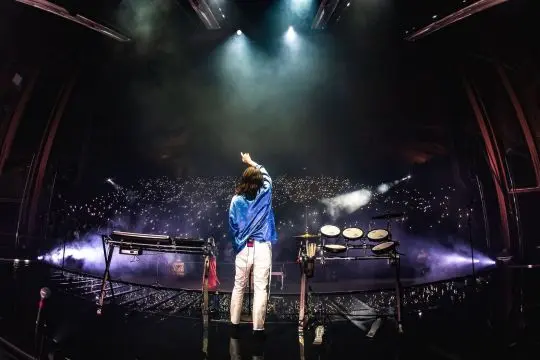
For examples of how artists turn shows into multi-week experiences, read the tour recaps on OnesToWatch.
Then use the artists on Top Artists To Watch in 2026 to plan your next show calendar.
User-Generated Video as a Discovery Engine
A substantial share of US music listeners have consumed short-form video on platforms including Meta Reels. Fan-made covers, dance challenges, lyric breakdowns, and reaction videos collectively act as a distributed promotional network that no marketing budget can fully replicate.
The human-versus-algorithmic contrast appears sharpest here. Algorithms surface UGC based on engagement signals, while human curators evaluate it for artistic merit and long-term potential. OnesToWatch specifically champions counter-trending artists whose authenticity generates genuine UGC rather than manufactured virality. The peer-driven advantage, the 3x engagement lift SoundCloud documented, explains why authentic UGC outperforms paid placement for sustained fandom growth.
To spot artists whose UGC is turning into real communities, browse OnesToWatch’s editorial picks.
Then cross-reference those picks with the 2026 OnesToWatch list to see who is breaking out.
Discord and Reddit as Gen Z Fan Infrastructure
Discord and Reddit now serve as the intimate infrastructure of Gen Z fandom. TikTok provides scale, while Discord provides depth through listening parties, direct artist interaction, release-day threads, and sustained conversation that builds genuine community over months and years.
Mastercard's 2026 Youth Blueprint reports that Gen Z, often described as the loneliest generation, turns to online communities to feel seen, with digital platforms enabling engagement that extends beyond local networks and spills into offline meetups. One Gen Z respondent from Vietnam captured it directly: "I have very few friends I know in real life but have many relationships with people online. Partly because friends from the same school or class will not share the same mindset, passion or simply not be compatible."
Live Nation's 2026 Love Song study found that shared fandom serves as a shortcut to community the moment attendees arrive at shows, a dynamic that Discord servers prime months in advance. The full loop runs from Reddit discovery to Discord participation, then to live-event attendance and post-show community recap. OnesToWatch editorial features slot naturally into the Reddit discovery stage, giving community members a credible, shareable source to anchor their recommendations.
To give your own community that kind of anchor, share relevant pieces from OnesToWatch’s editorial hub.
Use artists from Top Artists To Watch in 2026 as the backbone of your next Discord playlist or listening party.
Frequently Asked Questions
How does Gen Z discover new music differently from older generations?
Gen Z discovers music primarily through short-form video platforms and peer networks rather than radio or traditional editorial channels. Roughly 82% of Gen Z use social media or user-generated video sites for music discovery, and 51% specifically name TikTok as a primary source. Gen Z also explores new artists at a faster rate than older generations while dedicating a larger share of listening time to their favorites. That pattern balances broad discovery with deep loyalty in a way previous generations rarely combined.
What motivates Gen Z to stay active in fan communities?
Connecting with other fans is a top motivation for Gen Z to remain active in fandoms, with connection to creators ranking second. Authenticity and perceived human closeness matter enormously, as about half of Gen Z say they feel closer to creators than to traditional celebrities, and over half say social content feels more relevant than polished media. Communities that offer direct artist interaction, co-creation opportunities, and genuine belonging retain Gen Z members far longer than passive fan pages.
Do live events still matter for Gen Z fandom in the streaming era?
Live events matter more than ever for converting digital discovery into lasting fandom. The share of Gen Z attending multiple concerts per year has increased, and Gen Z live-event attendees now spend an average of $101 monthly on live music, more than any other generation. Nearly 90% of Gen Z are comfortable attending concerts alone, and the vast majority value the full event experience, including pre- and post-show community moments, as much as the performance itself. Live events now function as full-cycle community activations rather than one-time transactions.
Why does human curation outperform algorithms for building Gen Z fan loyalty?
Algorithms focus on engagement signals, while human curators evaluate artistic merit, narrative depth, and live-performance potential. MIDiA Research's 2025 analysis found that viral social-video exposure does not reliably convert into streaming or sustained fandom because listeners sometimes feel overexposed to a track before they actively seek it out. Peer-driven and human-curated discovery, by contrast, produces listeners who are three times more likely to engage with a track and explore music outside their usual genre. Human curation also supplies the artist story, the "why this artist matters" context, that transforms a trending sound into a followed career.
How can independent artists accelerate the discovery-to-community loop?
Independent artists accelerate the loop by pairing short-form video authenticity with human-curated editorial validation and deliberate community infrastructure. Practically, this means posting genuine behind-the-scenes content on TikTok and Reels to trigger curiosity detours and seeking features on trusted platforms like OnesToWatch to add narrative credibility. It also means activating a Discord server before a release to give early fans a home and treating live events as community culmination points rather than isolated bookings. Pre- and post-show Discord threads, Reddit AMAs, and collaborative playlists each extend the live-event halo and keep the loop cycling.
Conclusion: Building for the Full Gen Z Loop
Gen Z's path from stranger to superfan follows a repeatable six-step loop powered by short-form video triggers, peer amplification, human-curated validation, community infrastructure, and live-event conversion. Artists and labels that map their strategy to each stage outperform those who chase algorithmic shortcuts alone.
The data is consistent across every source: 82% social-media discovery, 51% TikTok primary source, 37% attending two-plus concerts annually, $101 monthly live-music spend, and peer-driven discovery producing three times the engagement of algorithm-driven exposure. The gap between a viral moment and a loyal fanbase is bridged by authenticity, narrative depth, and human curation, which OnesToWatch has delivered for over a decade while covering 850+ artists and helping launch careers from small venues to arenas for artists including Billie Eilish, Chappell Roan, Olivia Rodrigo, and Doechii.
For emerging artists, independent labels, and music marketers, the strategic imperative stays clear: build for the loop, not just the algorithm.
To see who is already winning on that loop, explore OnesToWatch's Top Artists To Watch in 2026.