
Last updated: September 17, 2026
Key Takeaways
- Discovery rooms are small venues under 500 people with clear genre identities and a history of booking artists early in their careers.
- Streaming platforms reward repeat listening, so underground venues remain the most reliable way to discover artists before data drives bookings.
- This guide covers 16 venues across two tiers, four genre lanes, and a city and regional hub network that includes New York, Los Angeles, Chicago, Austin, Seattle, Athens, and Connecticut.
- Effective discovery habits include checking venue calendars weekly, arriving for opening sets, tracking residencies, and following local support acts.
- OnesToWatch adds editorial context and curation so fans can understand and follow emerging artists they first encounter in these rooms.
Discover New Artists on OnesToWatch
Check Out OnesToWatch's Top Artists To Watch in 2026
What's In This Guide: Two Tiers, Four Lanes, City And Regional Hubs
This guide maps the small rooms that still launch artists, organized by tier, genre lane, and city or regional hub.
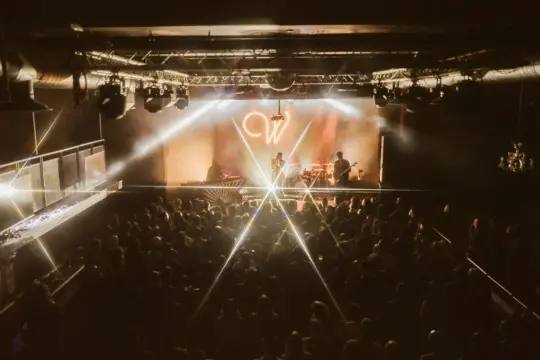
- Tier 1 — Career-Launching Rooms: The Troubadour (West Hollywood), Mercury Lounge (NYC), Empty Bottle (Chicago), Mohawk (Austin), 40 Watt Club (Athens, GA), Baby's All Right (Brooklyn)
- Tier 2 — Regional and DIY Hotspots: Soda Bar (San Diego), Barboza (Seattle), Cafe Nine (New Haven), Space Ballroom (Hamden, CT), The Webster Underground (Hartford), Cherry Street Station (Wallingford, CT), The Smell (Los Angeles), 529 (Atlanta), The Vera Project (Seattle), The Hideout (Chicago)
- Genre-Lane Framework: Indie/alt, punk/hardcore/metal, experimental/electronic, hip-hop
- City And Regional Hub: NYC, LA, Chicago, Austin, Seattle, Athens, and Connecticut (New Haven, Hamden, Hartford, Wallingford)
- Discovery Playbook: Step-by-step tactics for finding artists before they break
Tier 1: Career-Launching Rooms
1. The Troubadour — West Hollywood, CA
The Troubadour holds about 500 people in a standing general-admission format. Founded by Doug Weston in 1957 and relocated to 9081 Santa Monica Boulevard in 1961, it remains independently owned by the Karayan family. The room has a documented history of turning early bets into careers. Elton John made his American debut there on August 25, 1970, and Guns N' Roses played an early club date in the mid-1980s that led directly to their Geffen Records deal. The venue is all-ages, and its 500-person ceiling, well below larger West Hollywood rooms, keeps it attractive for underplay shows by arena-level artists. In 2026, the Troubadour still functions as a room that treats emerging artists like headliners before the wider industry does.
2. Mercury Lounge — Lower East Side, NYC
Mercury Lounge, at 217 East Houston Street, holds 250 people in a standing-room-only format. Opened in 1993, it is described by NYCExplored as one of the most influential small clubs in the country. After their December 2000 shows, The Strokes secured a weekly residency there, arranged by booker Ryan Gentles before he left to manage the band. Alumni include Yeah Yeah Yeahs, Interpol, Arcade Fire, Lana Del Rey, and Vampire Weekend. Advance tickets for Mercury Lounge shows are regularly priced at $15, with door prices often $5–$10 higher. In 2026, the room still centers indie rock, singer-songwriters, and emerging artists at the exact moment when a 250-person room fits their draw.
3. Empty Bottle — Ukrainian Village, Chicago
The Empty Bottle at 1035 N. Western Avenue opened in 1992 and moved to its current address on Halloween 1993. Maximum standing capacity is about 400. The room books indie rock, punk, jazz, electronic, hip-hop, experimental, noise, and free jazz. That range reflects a real curatorial identity instead of a generic mix. Jack White played a surprise 2022 show there that sold out within minutes. The Empty Bottle has occupied the same Western Avenue building for more than three decades, making it one of Chicago's longest-running independent music rooms. For Chicago artists, it remains the place where a serious ticketed booking often happens before any larger venue takes a chance.
4. Mohawk — Red River Cultural District, Austin, TX
Mohawk opened on September 15, 2006 at 912 Red River Street, with Ghostland Observatory headlining opening night. Reported capacity ranges from roughly 700 to 900 depending on configuration, split between an indoor stage and an outdoor deck. Artists who have played Mohawk include Iggy Pop, Spoon, Bad Brains, and Public Enemy. The venue serves as a regular official SXSW showcase room and an anchor of Austin's independent circuit. Many of its original Red River peers, including the original Emo's and Red 7, have closed, while Mohawk has stayed active. Its fall 2026 calendar includes Tricky on September 21 and Brian Fallon on October 6, showing that the room still backs artists with underground credibility.
5. 40 Watt Club — Athens, GA
The 40 Watt Club at 285 West Washington Street has an official capacity of 460, all general admission. It opened formally in May 1980 and is closely tied to the rise of Athens's 1980s music scene. R.E.M., the B-52's, Pylon, and Widespread Panic all played formative shows there. R.E.M. were regulars at the 40 Watt Club, using the room to test new material into the early 1990s. Nirvana played a chaotic set there on October 5, 1991, just weeks after Nevermind came out. The club remains independently owned and operated by Barrie Buck and received a star on the Athens Music Walk of Fame in 2024. In 2026, it still gives Athens artists their first real stage and challenges touring acts to win over a crowd that has seen everything.
6. Baby's All Right — Williamsburg, Brooklyn
Baby's All Right at 146 Broadway opened in 2013 with a capacity of around 350. The room focuses on emerging artists and experimental acts at the moment when they are ready for a real venue but still benefit from intimacy. Most shows land between $12 and $25. The sound system is described as punchy for the size, and the booking has stayed sharp since opening. In 2026, Baby's All Right sits in the middle of the Brooklyn discovery ladder, above basements and below 800-cap rooms, exactly where an artist needs to prove they can headline.
Explore Emerging Artists on OnesToWatch
See OnesToWatch's Top Artists To Watch in 2026
Tier 2: Regional and DIY Hotspots
DIY and all-ages spaces form the earliest layer of discovery. Artists often play these rooms before any Tier 1 booker knows their name. Crowds are smaller, entry is cheap or donation-based, and the main filter is a willingness to show up. This tier rarely appears in venue guides, yet it shapes who reaches the next level.
7. Soda Bar — San Diego, CA
Soda Bar is a compact San Diego room with a booking identity centered on punk and indie. It serves as a key step for local artists moving from house shows to ticketed venues. Touring acts that sit between basements and mid-size rooms also route through Soda Bar. The room's consistent genre focus makes its calendar a reliable signal for anyone tracking Southern California punk and indie.
8. Barboza — Seattle, WA
Barboza is an intimate showroom on the lower level of the Neumos complex at 925 East Pike Street in Seattle's Capitol Hill neighborhood, dedicated to rising alternative touring acts. It functions as the smaller sibling to one of Seattle's main mid-size venues, which gives emerging artists access to a serious booking pipeline. Because of that positioning, Barboza often hosts alternative artists as they first build Pacific Northwest audiences.
9. Cafe Nine — New Haven, CT
Cafe Nine is a long-running small room that anchors Connecticut's indie and punk scene. It has booked local and regional acts for decades and acts as New Haven's primary discovery room. For artists building a Northeast touring route, Cafe Nine fills a crucial gap between New York and Boston dates.
10. Space Ballroom — Hamden, CT
Space Ballroom in Hamden books emerging touring acts at a regional level. It sits above the smallest Connecticut rooms and below the state's larger theaters. The calendar reflects the broader Northeast indie and alternative circuit. For artists building audiences across Connecticut and southern New England, Space Ballroom often serves as a proving ground.
11. The Webster Underground — Hartford, CT
The Webster Underground is the smaller room within The Webster, a larger Hartford venue. It focuses on emerging artists and operates as a separate discovery layer from the main room's established bookings. For Connecticut artists, a Webster Underground slot marks a step up to a room with full production while still keeping the audience size manageable.
12. Cherry Street Station — Wallingford, CT
Cherry Street Station is a DIY-leaning room in Wallingford with a booking identity centered on punk, hardcore, and metal. It functions as a grassroots space for the heaviest end of Connecticut's underground circuit. Local and regional heavy acts use the room as a stage that mirrors the energy of basement shows while offering more consistent production.
13. The Smell — Downtown Los Angeles, CA
The Smell is an all-ages, no-alcohol DIY basement in downtown Los Angeles that runs on donations with no advance tickets. Punk, noise, and experimental acts often play there before appearing anywhere else. The Smell's operating constraints filter its audience. No alcohol, donation entry, and a basement location select for people who show up for the music itself. For emerging artists, that kind of focused crowd is invaluable.
14. 529 — East Atlanta Village, Atlanta, GA
529 at 529 Flat Shoals Ave SE has a capacity of 250 and has been open since 2008. It operates most nights with a booking philosophy that champions emerging and touring acts while keeping ticket prices low and the crowd close to the stage. Its 2026 calendar spans metal (EYEHATEGOD on September 19, Kylesa across multiple October dates), punk and hardcore (Sheer Terror on October 1), and hip-hop (nascar aloe on September 20). The venue repeatedly books the same emerging local acts, including Kylesa and Cody Bolden & The Roadhands, which shows how small rooms develop artists over multiple appearances.
15. The Vera Project — Seattle, WA
The Vera Project is an all-ages community venue in Seattle with a Black Lodge room designed for intimate shows and workshops. Its all-ages policy defines its role in the city. Younger artists and audiences who cannot enter bar venues still have a place to play and gather. The Vera Project functions as both a performance space and a community hub, so artists and fans often grow together there before either has a public profile.
16. The Hideout — Chicago, IL
The Hideout is a weathered dive tucked behind a lumber yard on Wabansia in Chicago. Its back room hosts indie, folk, and country acts for under 100 people, with walk-up entry most nights. At under 100 capacity, it is the smallest room on this list and the closest to a house-show experience. The programming focuses on indie, folk, and country, and the walk-up entry culture means many discoveries happen on impulse.
Find Your Next Favorite Artist on OnesToWatch
Explore OnesToWatch's Top Artists To Watch in 2026
How To Pick Underground Music Venues By Genre Lane
Now that the venues are mapped by city and tier, genre lane shows which rooms actually fit a listener or artist. The four primary lanes across this list break down as follows.
Indie/Alt: Mercury Lounge (NYC), Baby's All Right (Brooklyn), Empty Bottle (Chicago), The Hideout (Chicago), Mohawk (Austin), Barboza (Seattle), Cafe Nine (New Haven), and Space Ballroom (Hamden) all work this lane at different capacities. Mercury Lounge and Baby's All Right are the most active discovery rooms for indie and alt in 2026, consistently booking artists just before they move to 500-cap rooms. The Troubadour covers the same lane in Los Angeles and also hosts underplay shows by artists who have already broken.
Punk/Hardcore/Metal: The Smell (Los Angeles), 529 (Atlanta), Cherry Street Station (Wallingford), and The Empty Bottle (Chicago) are the main rooms in this lane. The Smell operates at the most underground end with donation-based, all-ages, no-alcohol shows. 529 books established touring acts in metal and hardcore alongside emerging local artists. Cherry Street Station covers the Connecticut regional circuit for the heaviest subgenres. Venue fit matters more than venue size. A smaller room filled with the right audience beats a bigger room where nobody connects with the music, and these rooms consistently draw heavy-music fans.
Experimental/Electronic: The Smell (Los Angeles) and The Vera Project (Seattle) anchor this lane at the DIY end. Empty Bottle (Chicago) covers experimental and noise at a slightly larger scale. Fans who want to track experimental and electronic artists before they reach club-level bookings should watch these calendars closely. The Smell in particular has a long history of hosting experimental acts early.
Hip-Hop: 529 (Atlanta) is the clearest entry point in this lane among the rooms listed, with hip-hop acts including nascar aloe on its 2026 calendar alongside metal and punk. Mohawk (Austin) has hosted hip-hop acts including Public Enemy and Ice Cube. Baby's All Right (Brooklyn) books hip-hop alongside indie rock and electronic. For hip-hop discovery, the support-slot mechanic matters most. A 2025 peer-reviewed study by Jeff Apruzzese of Drexel University found that 68% of concertgoers had discovered new bands through opening acts, and 67% had streamed the opening act's music afterward.
Best Cities For Upcoming Musicians And New Artists
New York City — Lower East Side And Williamsburg/Bushwick
The Lower East Side remains the rock and indie center of New York's discovery scene, anchored by Mercury Lounge (217 E Houston St) and supported by Rockwood Music Hall (196 Allen St, free entry on Stage 1) and Pianos (158 Ludlow St). Brooklyn's discovery circuit runs through Williamsburg, with Baby's All Right at 146 Broadway, and extends into Bushwick, where Elsewhere at 599 Johnson Ave programs indie, electronic, and international acts across multiple stages. New York City has more than 500 live music venues across all five boroughs, with most club shows priced $15–$40. The city's discovery infrastructure in 2026 remains dense and active.
Los Angeles — West Hollywood And Downtown
West Hollywood's discovery anchor is the Troubadour at 9081 Santa Monica Boulevard, which covers indie, rock, and singer-songwriter lanes at 500 capacity. Downtown Los Angeles hosts The Smell, which covers punk, noise, and experimental music at the all-ages, donation-based end of the spectrum. Together, the two rooms represent opposite ends of the LA discovery ladder and cover most of the underground genre map. Silver Lake's Echo (350 capacity) fills the indie and Latin-alternative lane between them.
Chicago — Ukrainian Village And Wicker Park
Chicago's underground discovery circuit runs through two key rooms. Empty Bottle at 1035 N. Western Avenue in Ukrainian Village (400 capacity, multi-genre) handles serious ticketed bookings. The Hideout behind the lumber yard on Wabansia (under 100 capacity, indie, folk, country) captures walk-up discovery. Together they span the range from structured touring shows to spontaneous nights out. Both have operated for decades and remain independently owned and programmed.
Austin — Red River Cultural District
Mohawk at 912 Red River Street is the primary discovery anchor in Austin's independent circuit. Many of its Red River Cultural District peers, including the original Emo's and Red 7, have closed, which makes Mohawk's continued presence more significant. As a regular SXSW showcase venue, it also acts as a gateway for artists entering the national touring circuit. Austin's discovery scene in 2026 is more concentrated than it was a decade ago, so Mohawk's calendar carries more weight.
Seattle — Capitol Hill
Seattle's discovery circuit runs through Barboza, a sub-level alternative room on Capitol Hill, and The Vera Project, an all-ages community venue. Barboza focuses on touring alternative acts building Pacific Northwest audiences. The Vera Project supports the earliest-stage artists and the all-ages audiences that follow them. Capitol Hill remains the neighborhood anchor for Seattle's underground scene in 2026.
Athens, GA — Downtown
The 40 Watt Club at 285 West Washington Street effectively holds Athens's discovery infrastructure in a single room. Its 460-person capacity, independent ownership under Barrie Buck, and four-decade track record make it one of the most historically significant small venues in the United States. The 2024 Athens Music Walk of Fame star outside its front door marks institutional recognition. The room still functions as the place where Athens artists step onto a real stage for the first time.
New Haven And Connecticut — A Regional Circuit
New Haven's discovery anchor is Cafe Nine, supported by Space Ballroom in Hamden, The Webster Underground in Hartford, and Cherry Street Station in Wallingford. Together these four rooms form a functional Connecticut circuit that covers indie, punk, hardcore, and metal across multiple capacities. For artists building Northeast touring routes, this circuit fills the gap between New York and Boston dates. The National Independent Venue Association reported in its June 2025 study that independent stages produce 153,646 events annually, with 91% operating year-round. Regional circuits like Connecticut's make up a meaningful share of that activity.
How To Actually Discover An Artist At A Venue
Discovery inside a venue follows a repeatable pattern. The playbook below outlines the habits that help fans find artists early instead of hearing about them after everyone else.
Check Venue Calendars Weekly, Not Algorithmically. Smaller venues often post lineups on their own websites before events spread widely across apps, so venue calendars are the most reliable source for shows below arena level. Track two to five known venues, at least two venues one size smaller than your usual preference, and at least one venue tied to a genre scene you want to explore. A weekly 10-to-15-minute check of top local venue calendars and newsletters forms a simple, effective system.
Arrive For The Openers. 81% of concertgoers said they were likely to arrive early enough to see an opening act perform, yet only 39% considered the opener when purchasing a ticket. That gap means openers rarely sell the ticket but usually play to a real audience. In the same 2025 Drexel University study, half of concertgoers later bought tickets to see an opening act headline its own show. At Mercury Lounge, doors are typically at 7 p.m. for an 8 p.m. show. At 529, the crowd stands close to the stage from the first act. Showing up at door time at any room on this list is the single most reliable way to find an artist early.
Follow Residency Nights. Residency bookings, where the same artist or series appears at a venue over multiple weeks, signal that a room believes in that artist. R.E.M. used the 40 Watt Club as a frequent home base, playing there from 1980 onward and testing new material into the early 1990s. After their initial December 2000 shows at Mercury Lounge, The Strokes secured a weekly residency arranged by booker Ryan Gentles. In 2026, watching which artists 529 books across multiple dates, such as Kylesa's October run, highlights the acts a room is actively developing.
Talk To Door Staff And Bookers. At rooms under 400 capacity, the person at the door often knows the booking calendar better than any app. At The Hideout, walk-up entry most nights means the door staff effectively is the calendar. At Baby's All Right, bookers are accessible and often present in the room. The human layer of discovery at small venues usually moves faster than the digital one.
Track Local Support Slots. A local support slot, where a regional act opens for a touring artist, is the earliest clear signal of momentum. At Mohawk, local Austin acts often fill support slots on touring bills before they have any national profile. At Empty Bottle, Chicago artists follow the same pattern. Following the local support acts on any bill at a Tier 1 room gives fans a direct path to artists who have not yet signed with booking agents.
How Do I Find Underground Artists?
Start by subscribing to venue calendars for the rooms listed above. Follow the local support acts on any bill at a career-launching room. Attend shows at DIY and all-ages spaces such as The Smell in Los Angeles and The Vera Project in Seattle, where artists perform before they have any profile. For this tier, the venue calendar functions as the discovery engine.
Where Is The Best Place To Discover New Music?
The best place is usually the smallest room in a city with a clear booking identity. Mercury Lounge at 250 capacity, Baby's All Right at 350, and The Hideout at under 100 all surface artists before streaming platforms have enough data to recommend them. The real magic happens in the small venues, the 200-seat basement where an artist you have never heard of can change how you think about music. Once you find an artist in a room like that, platforms like OnesToWatch provide editorial context and curation so you can understand where that artist fits in the broader landscape and where they might be headed.
Discover OnesToWatch's Top Artists To Watch in 2026
Frequently Asked Questions
What Makes A Venue A "Discovery Room"?
A discovery room is a small-capacity venue, typically under 500 people, with a genre-specific booking identity and a verifiable history of early bookings that later broke nationally. Three features define it. The room is intimate enough that the audience stands close to the artist. The booker takes real risks on artists before data supports the decision. The venue has repeated this pattern over time. The Troubadour, Mercury Lounge, and 40 Watt Club all fit this definition. The Smell does as well at a smaller, more DIY scale.
How Do I Find DIY And All-Ages Shows In My City?
DIY and all-ages shows rarely appear on major ticketing platforms. The most reliable methods include following local artists and promoters on Instagram and Bandcamp, scanning neighborhood Facebook groups and Reddit city threads, checking alt-weekly event calendars, and joining venue mailing lists. For the rooms on this list, The Smell in Los Angeles posts show information through its own channels and does not sell advance tickets. The Vera Project in Seattle maintains its own calendar. Cherry Street Station in Wallingford and Cafe Nine in New Haven both maintain venue websites with booking calendars. Community channels, not algorithms, provide access to this tier.
Do Small Rooms Still Break Artists In 2026?
Small rooms still break artists in 2026. The mechanism remains the same. A booker bets on an artist before data exists to justify it. The room puts that artist in front of an audience. The audience responds and spreads the word. What has changed is the speed at which a small-room performance can travel. A set at Mercury Lounge or Baby's All Right can circulate on social platforms within hours. Rooms that still break artists today share one trait. They maintain a strong booking identity instead of relying only on legacy reputation. The 40 Watt Club, Empty Bottle, and Mohawk continue to function as proving grounds because their bookers still take risks.
How Do I Compare Venues By Genre Lane?
The four primary lanes map to specific rooms. Indie and alt: Mercury Lounge, Baby's All Right, Empty Bottle, Mohawk, Barboza. Punk, hardcore, and metal: The Smell, 529, Cherry Street Station, Empty Bottle. Experimental and electronic: The Smell, The Vera Project, Empty Bottle. Hip-hop: 529, Baby's All Right, Mohawk. Rooms like Empty Bottle and 529 cross multiple lanes, which makes them valuable discovery rooms because a single calendar spans a wide genre range. Single-lane rooms such as The Smell, focused on experimental and punk, and Cherry Street Station, focused on punk, hardcore, and metal, work best for listeners with a specific genre focus.
What's The Best Way To Track Upcoming Shows At These Venues?
Subscribe directly to each venue's mailing list and bookmark their event calendars. For New York, NYCExplored identifies Oh My Rockness as the indie and rock-focused NYC show calendar and recommends Time Out New York music listings as practical ways to track what's playing on a given night. For Chicago, the Empty Bottle and The Hideout both maintain their own calendars. For Austin, Mohawk's calendar at mohawkaustin.com is the primary source. For Atlanta, 529's booking contact is listed at 529atlanta.com/contact/. A weekly check of five to seven venue calendars, combined with direct artist follows on social platforms, outperforms any single discovery app for these rooms.
Stay Ahead Of The Curve With OnesToWatch
Conclusion: The Rooms That Still Break Artists
Two patterns stand out across both tiers of this guide. Career-launching rooms still matter, and their value comes from current booking choices rather than history alone. The Troubadour matters in 2026 because it still books underplay shows and maintains an all-ages policy. Mercury Lounge matters because its bookers still take chances on 250-person bills. The second pattern is that the DIY and all-ages tier, including The Smell, The Vera Project, The Hideout, and Cherry Street Station, forms the true front line of discovery. These are the rooms where artists play before anyone has heard of them and where the audiences who will follow them for the next decade first encounter them.
For fans, this guide works as a framework for exploring your own city's scene. Find the equivalent of The Hideout in your market, the smallest room with a consistent booking identity, and track it weekly. Arrive for the openers. Follow the local support acts. The artist you discover in a 100-person room this month may be the one filling a 1,000-person room next year.
For emerging artists, the venue ladder remains real, and the rooms on this list represent specific rungs. A support slot at Cafe Nine can lead to a headline at Space Ballroom, which can lead to a booking at Mercury Lounge or Baby's All Right. The ladder works when these rooms stay healthy and when artists and fans treat them as the discovery infrastructure they are.