
Written by: Kai Eldridge, Music Discovery Editor, OnesToWatch
The 30-Second Listening Test: Your Core Discovery Tool
Master this five-part listening protocol before the gates open, because you will use it at every stage all weekend.
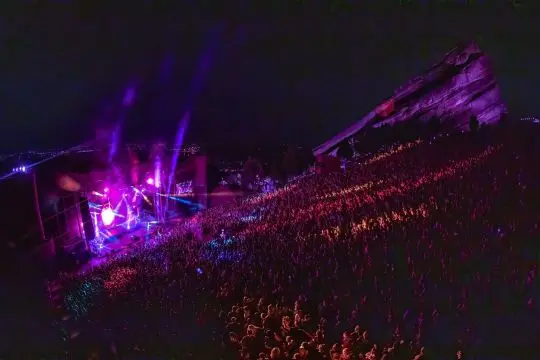
- Hook check (0–10 sec): Notice whether the opening riff, beat, or vocal line grabs you with immediate tension or release. If it does, stay.
- Crowd read (10–15 sec): Scan the audience around you. Genuine movement, not polite nodding, signals real live energy and connection.
- Texture layer (15–20 sec): Listen for a second instrument or vocal layer entering. Extra texture in the arrangement often predicts replay value.
- Save-rate proxy (20–25 sec): Ask yourself whether you would Shazam this right now. Your instinct to search mirrors the save-rate signal that streaming platforms use to measure listener intent.
- Body response (25–30 sec): Check for a physical reaction such as goosebumps, a foot tap, or a shift in posture. The sensory effect of being immersed in live sound vibrations has deep neurological impact that solo listening cannot match, so your body often gives the most honest answer.
Key Takeaways for Shaky Knees 2026
- Shaky Knees 2026 headliners The Strokes, Gorillaz, and Twenty One Pilots draw huge crowds, while the undercard delivers the richest discovery moments through live-performance signals.
- A five-step, 30-second listening test with hook, crowd read, texture, save-rate instinct, and body response helps you quickly decide which undercard acts deserve your time.
- Genre-fluid undercard acts like Blood Orange and Santigold act as sonic bridges, so fans of multiple headliners can move between stages without feeling like they are missing out.
- Tracking real-time signals such as retention, engagement, and depth, then pairing them with post-show streaming velocity, turns a festival weekend into a structured, data-backed discovery system.
- Cross-reference every promising discovery against OnesToWatch’s 2026 curated list to match your live instincts with editorially vetted emerging-artist profiles.
1. Map Headliner DNA to Undercard Overlaps
Start your discovery work before the festival opens. Pull up the full Shaky Knees 2026 bill and write down three sonic traits for each headliner you plan to see. The Strokes lean on dry guitar tone, deadpan vocals, and New York post-punk economy. Gorillaz blend genre collage, hip-hop cadence, and indie-electronic production. Twenty One Pilots build arena-scale emotional pop on hip-hop and alternative rock foundations.
Scan the undercard for acts that align with even one of those traits. Fontaines D.C., Geese, Wolf Alice, Turnstile, Blood Orange, and Santigold all appear on the 2026 bill and reward fans of the headliners. Treat that group as your starting shortlist.
2. Target Genre-Fluid Acts Built for Cross-Stage Migration
Headliners can distort festival perception, because a rock-heavy top line can hide a large electronic or hip-hop undercard. Genre-fluid acts deserve priority, since they reward fans of multiple headliners in a single set. Organizers connect headliner tastes to undercard acts by building genre bridges that highlight overlaps in rhythm, sound, or cultural code.
At Shaky Knees 2026, Blood Orange, who blends alt, electronic, and R&B, and Santigold, who delivers dancehall-inflected indie pop, function as these bridges. Both satisfy Gorillaz fans and Twenty One Pilots fans in a single performance.
3. Apply the 30-Second Listening Test at Every Stage
Treat the five-step protocol as a habit, not a one-time exercise. Run it at the start of every set you wander into, including the ones you reach by accident. Festival serendipity from arriving early, hiding from the heat, or following a friend often produces the strongest discovery moments because you have no expectations.
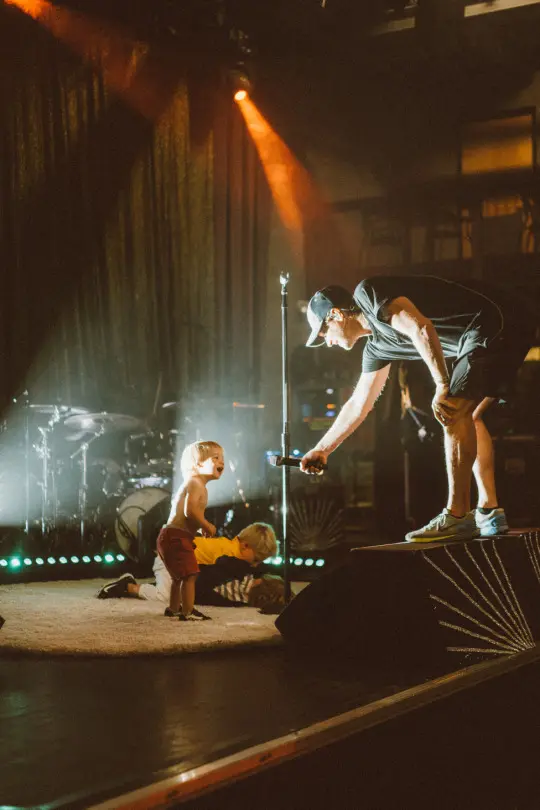
After seeing an artist perform live, 31% of attendees went on to see the artist again, 29% became a fan, 27% recommended the artist to someone else, and 27% discovered a song that became one of their all-time favorites. The 30-second test acts as the gate that lets those outcomes in.
The artists who pass your 30-second test at Shaky Knees match the type of act OnesToWatch follows year-round, with genuine live-performance potential rather than only strong streaming numbers. Cross-reference your discoveries with OnesToWatch’s Top Artists To Watch in 2026 to see which emerging names already carry that editorial validation.
4. Use Stage-by-Stage Energy Mapping Across the Park
Once you have a feel for which acts pass the 30-second test, focus on where to apply it. Shaky Knees’ four-stage layout creates distinct energy environments that shape how you experience each set. The main stage hosts high-production headliner shows with large, diffuse crowds that feel like shared spectacle.
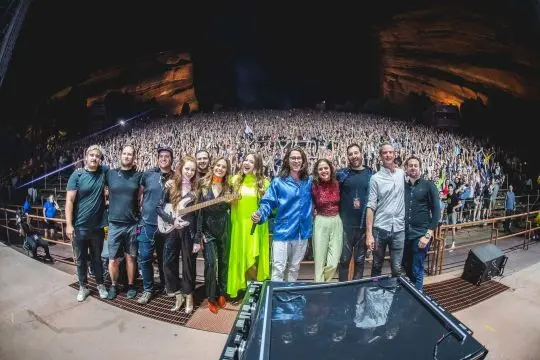
Smaller stages such as Ponce de Leon compress the audience, which amplifies crowd energy and makes genuine fan response easier to read. Festival organizers build lineups around arcs like opening, build-up, prime time, and late-night blocks to create a coherent journey across stages. Map your day by energy arc instead of only by artist name.
Catch build-up acts on smaller stages in the early afternoon, then move to the main stage for prime-time headliners. Acts playing a build-up slot on a smaller stage with a packed crowd are already demonstrating strong draw for their career level.
5. Track Live Performance Signals in Real Time
Watch three simple signals during each set. Compare crowd density at the start and end of the show to gauge retention. Notice the balance between people filming and people dancing to understand engagement quality. Pay attention to whether the artist holds the crowd during a slower or unfamiliar song, which reveals depth of connection.
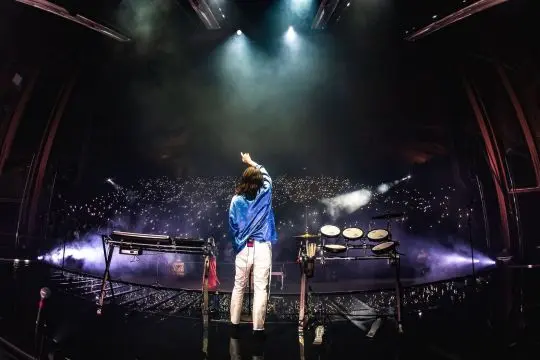
Booking agents evaluate an artist’s readiness through ticket history, including venue, capacity, and tickets sold, because live draw proves real audience demand. You are running a fan-level version of that same evaluation in real time on the festival grounds.
6. Use Post-Show Streaming Velocity as a Signal
Within 24 hours of a set that passed your 30-second test, open Spotify and check the artist’s monthly listener trajectory and save rate. Save rates above 5% suggest strong listener intent, which means other fans treat the artist’s catalog as something worth returning to, not just a one-time stream.
Cross-reference with TikTok activity. About 30% of global music fans use TikTok to watch live concert clips, so a spike in festival-weekend clip views offers a reliable velocity signal. Festival-playing artists who run a parallel Spotify campaign in the festival market for four weeks before and after the show see roughly 38% higher post-festival listener retention. Artists investing in that window deserve extra attention on your follow list.
7. Build a Personal Discovery Shortlist Before Gates Open
Create a pre-festival shortlist to cut decision fatigue on show day. Use the headliner DNA map from Step 1 and the genre-fluid act list from Step 2 to select eight to ten undercard acts to investigate before September 18. Listen to one song per act, not a full album, and note whether it passes steps one through three of the 30-second test at home.
Acts that pass at home and then exceed expectations live become your strongest candidates for long-term fandom. Venue capacity progression over the past 12–18 months remains one of the most reliable indicators of sustainable career growth, so a quick search of recent tour history adds a useful data layer to your shortlist ranking.
8. Turn Festival Clips into Long-Term Fandom
About 88% of concert attendees post photos or videos to social media during the event. The clips you and other fans capture function as discovery assets, not just souvenirs. The traditional music discovery path has flipped for many younger listeners, who now watch short live festival clips, search for the artist, stream their music, follow them, and only later buy tickets.
Post your clips with the artist’s name tagged so other fans can find them. Follow the artist’s official accounts right after the set. Turn on notifications for their next release. These three simple actions convert a single 30-second live moment into an ongoing relationship, and the post-performance conversion rates mentioned earlier, where nearly a third of attendees become repeat concertgoers, show why those clips keep working long after the weekend ends.
9. Schedule Post-Festival Follow-Up Playlists
Within 48 hours of the festival closing, build a playlist with one song per act that passed your live test. Keep the list to 10–15 tracks so it feels like a focused listening session instead of an archive. Revisit it at the one-week and one-month marks to see which songs still hit.
Around three-quarters of Gen Z listeners have searched for an artist after first encountering them in videos or live footage, and your post-festival playlist recreates that first spark in a controlled setting. Acts whose songs improve with repeated home listening, instead of fading without the live context, deserve your attention during their next tour cycle.
10. Validate Your Discoveries with OnesToWatch’s 2026 Class
Finish your process with validation. After you build your shortlist from Shaky Knees, compare it against a curated, editorially vetted source. OnesToWatch’s 2026 class highlights 30 emerging artists across alt-R&B, pop, rap, electronic, and rock, with profiles covering recent releases, tours, collaborations, and unique traits that position them for breakout success.
If an act you discovered at Shaky Knees appears on that list, you gain independent editorial confirmation that your live signal was accurate. If they do not appear, the list still expands your universe with artists who share similar curatorial criteria, including authentic artistry and strong live performance potential. Complete your discovery loop by exploring OnesToWatch’s Top Artists To Watch in 2026, a staff-selected class that mirrors the bar your live instincts set at the festival.
Genre-Diversity Matchups for Shaky Knees 2026
| Headliner | Core DNA | Undercard Match | Live-Energy Note |
|---|---|---|---|
| The Strokes | Post-punk, dry guitar, deadpan vocal economy | Fontaines D.C., Geese | Both acts reward front-of-stage positioning. Fontaines D.C. builds intensity through repetition, while Geese layers noise-rock dynamics over tight rhythm sections. |
| Gorillaz | Genre collage, hip-hop cadence, indie-electronic production | Blood Orange, Santigold | Blood Orange’s live show shifts between R&B intimacy and electronic density. Santigold’s dancehall-inflected sets generate consistent crowd movement from the first song. |
| Twenty One Pilots | Arena pop built on hip-hop and alternative rock, high emotional register | Turnstile, Wolf Alice | Turnstile converts hardcore energy into accessible anthems with crowd-participation moments. Wolf Alice builds from quiet tension to full-band release. |
Frequently Asked Questions
How can I tell if an undercard act will translate live?
Use venue capacity progression and ticket sale velocity as your pre-festival guide. An artist who moves from 200-cap rooms to 500-cap rooms in 12 months and sells them out quickly shows real audience demand in physical spaces. At the festival, crowd retention offers the clearest real-time signal, because fans who stay through the full set rather than leaving after two songs reveal genuine interest.
Genre-fluid acts with strong rhythm sections usually translate most reliably. The physical experience of bass and percussion in a live environment amplifies engagement even when the audience does not know the songs yet.
When should I arrive for discovery sets versus headliners?
Arrive at the start of discovery sets on smaller stages instead of drifting in halfway through. Undercard acts on stages like Ponce de Leon often play 30–45 minute sets, and the opening song gives you the best chance to apply the 30-second listening test with the full set ahead of you.
For headliners, arriving 15–20 minutes before stage time usually secures a solid spot. Use that pre-headliner window to catch the final 10 minutes of the preceding undercard act on a nearby stage. That compressed exposure often produces powerful discovery moments because the artist is closing with their strongest material.
Are OnesToWatch selections based more on streaming numbers or live draw?
OnesToWatch’s editorial team prioritizes authentic artistry, enduring talent, and live performance potential over raw streaming volume. The curation process stays human and listening-driven rather than algorithmic. Each artist in the yearly class is evaluated on creative vision, recorded output, and the ability to build a sustainable career through live performance.
Streaming data still informs the process without fully determining it. An artist with strong save rates and growing venue capacity carries more weight than one with high passive stream counts but limited live draw.
What if my headliner tastes do not match the undercard?
Shaky Knees programs more than 60 acts across four stages to serve fans whose tastes do not align with any single headliner. If The Strokes, Gorillaz, and Twenty One Pilots do not fully reflect your listening habits, the undercard still offers post-punk, hardcore, indie rock, electronic, and alt-hip-hop options.
Use the genre-diversity table above as a starting point, then apply the 30-second listening test to acts outside your comfort zone. The neurological impact of live sound, with full physical immersion, often creates connections that a home listening session would never spark. Treat genre mismatch as an invitation to experiment rather than a reason to skip a set.
Conclusion
Shaky Knees 2026 delivers one of the most genre-diverse undercards of any U.S. rock-leaning festival this year, with a lineup that maps directly from three distinct headliner DNA profiles to a deep bench of emerging acts. The 10-step playbook, from pre-festival headliner mapping through post-festival playlist scheduling and editorial validation, turns a three-day event into a structured discovery system.
The 30-second listening test sits at the center of that system, while the stage-by-stage energy map and streaming velocity checks provide the follow-through. Every act that passes your live filter at Piedmont Park can become a lifelong favorite, and the data consistently shows that live performance remains the most durable discovery mechanism available. Start building your post-festival follow list with OnesToWatch’s Top Artists To Watch in 2026.