
Written by: Kai Eldridge, Music Discovery Editor, OnesToWatch | Last updated: August 6, 2026
Key Takeaways for 2026 Listening
- Algorithmic recommendations often narrow musical diversity over time, while human curation introduces genuinely new sounds and cross-genre artists.
- Human curators provide cultural context, emotional framing, and serendipitous discoveries that pattern-matching algorithms cannot replicate.
- Emerging artists with little streaming data benefit most from editorial playlist placements, which can move tracks from thousands to millions of listeners in a single week.
- Live-performance potential and long-term fan relationships are qualitative judgments that human curation excels at, whereas algorithms focus solely on audio features and listening behavior.
- For listeners seeking trusted human pathways into the next generation of music, OnesToWatch’s editorial team surfaces emerging talent before algorithms catch on.
How This Comparison Measures Discovery
- Taste Expansion: Does the method introduce genuinely new sounds, or reinforce existing preferences?
- Context and Surprise: Does the method provide cultural framing and unexpected discoveries?
- Emerging-Artist Visibility: Can the method surface artists with little or no prior listening data?
- Live-Performance Relevance: Does the method connect listeners to artists with strong live potential?
- Long-Term Engagement: Does the method build durable fan relationships or produce one-time plays?
Human vs Algorithmic Discovery at a Glance
| Criterion | Human Curation | Algorithmic Recommendations | Winner / Notes |
|---|---|---|---|
| Taste Expansion | Introduces novelty and cross-genre artists based on editorial judgment, and a good editorial playlist exposes listeners to 15–20 tracks they would not have found independently | A 2021 EPJ Data Science study found that users with eclectic habits showed measurably reduced genre spread after six months of algorithmic listening | Human Curation, because algorithms narrow diversity over time |
| Context and Surprise | Curators supply cultural context, emotional arc, and timing that pattern-matching models cannot replicate | Algorithms struggle with emotional arc across a playlist sequence and optimize for proximity to existing listening patterns | Human Curation, because serendipity requires intent |
| Emerging-Artist Visibility | Can champion an unknown artist on creative merit alone, and a major editorial playlist placement can move a track from thousands to millions of listeners in a single week | Collaborative filtering suffers from a cold-start problem, lacking sufficient data for new artists until enough interactions occur | Human Curation, because algorithms require existing momentum |
| Live-Performance Relevance | Live Nation’s 2026 Love Song study found over half of Gen Z rely on playlists, content creators, and events to navigate music experiences, and human curators explicitly factor in live potential | Algorithms do not assess live performance quality or touring readiness, and recommendations are based on audio features and listening behavior | Human Curation, because live potential is a qualitative judgment |
| Long-Term Engagement | Live performance and editorial features convert strangers into fans through relationships the artist controls | Spotify research shows that when users become more diverse in their listening, they shift away from algorithmic consumption toward organic consumption | Human Curation, because durable fandom requires context and narrative |
Where Human and Algorithmic Discovery Overlap
Both human curation and algorithmic recommendations share a fundamental objective: connecting listeners with music they will value. Spotify’s algotorial playlists, where human curators build the track pool and algorithms personalize ordering, can improve retention compared with purely human-curated lists, which shows that the two methods work best in combination. Both also respond to listener feedback signals, whether through editorial re-evaluation or algorithmic skip and save data. However, each method processes and acts on that feedback in very different ways, and those differences shape what listeners actually discover.
Key Differences in Scale, Bias, and Serendipity
Algorithms operate at a scale no editorial team can match. Music streaming services collectively process around 100,000 new tracks uploaded daily, and that volume creates structural trade-offs. Popularity bias in music recommender systems creates a feedback loop, where algorithms favor popular tracks for short-term satisfaction, user feedback reinforces those tracks in training data, and smaller artists receive progressively less exposure. Human curators, by contrast, can champion a counter-trending artist purely on creative merit and introduce what researchers at the Journal of Cultural Economics describe as “beneficial noise” that helps unfamiliar tracks in new or hybrid genres surface.
Geographic bias compounds the problem. A University of Melbourne analysis of millions of Spotify tracks and playlists found that AI-generated playlists tend to draw from fewer unique tracks than human-curated editorial playlists, and that AI playlists in Australia, the UK, and Canada closely mirror US listening patterns, which reproduces American tastes as global norms.
Benefits and Trade-Offs for Everyday Listening
Algorithms deliver unmatched convenience. Many Spotify users find AI-recommended playlists convenient and are happy to receive algorithmically suggested tracks rather than actively searching for new music. For background listening or mood-matching, personalization engines feel efficient and low effort.
Human curation’s primary advantage is its ability to surface counter-trending artists and assess live performance potential, qualities that no audio-feature extraction tool can replicate. A 2026 study of European music professionals found that many described platform-curated playlists as making listening passive, which can reduce opportunities for musical discovery of niche or emerging artists. Human editorial judgment interrupts that passivity by attaching narrative and intent to each selection.
When Human Curation Matters Most
- Dedicated fans seeking underground talent: Human curation from platforms like OnesToWatch surfaces artists before algorithmic momentum exists and provides cultural context that streaming recommendations cannot.
- Emerging artists wanting career pipelines: Editorial features and curated playlist placements trigger a “halo effect” in which an immediate stream spike sends engagement signals to algorithms, which then push tracks into personalized feeds like Discover Weekly.
- Industry professionals scouting youth culture: Deloitte’s 2026 survey indicates that many Gen Z fans discover new content through social media, and human-curated editorial coverage supplies the validated, in-depth context that social signals alone cannot provide.
Practical Trade-Offs: Time, Replays, and Live Shows
Algorithmic playlists require no active effort from the listener, but if users stick with algorithmic-only listening, they risk over-specialized recommendations that worsen over time. As noted earlier, this convenience often comes with progressively narrower discovery. Human-curated discovery requires more intentional engagement, such as reading features, following editorial outlets, and attending live events, yet the payoff is measurably stronger.

Luminate Data analysis shows that live events drive 42% growth in local on-demand streaming during event weeks, and Gen Z live event attendees spent a monthly average of $101 on live music in Q1 2026, which outpaces every other generation.
Long-Term Value of Human-Nurtured Careers
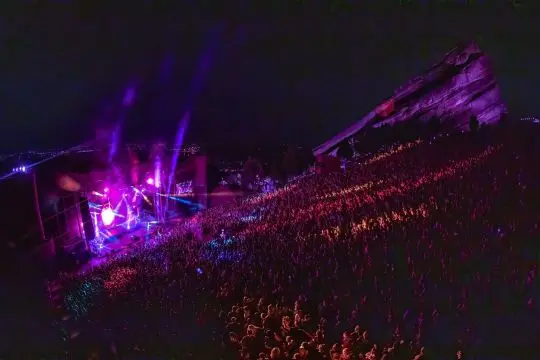
OnesToWatch has covered more than 850 artists over the past decade, with approximately 1% migrating from small venues to arenas, a roster that includes Taylor Swift, Billie Eilish, Chappell Roan, Charli XCX, Olivia Rodrigo, SZA, Doechii, and Post Malone. That track record reflects what algorithmic systems structurally cannot do, which is identify an artist’s live performance potential and cultural significance before streaming data exists to confirm it. Younger listeners increasingly discover artists through short-form concert clips on social media, then check them out on streaming platforms, follow them, and buy tickets, with the full transaction often occurring in minutes. Human curation often initiates that chain, and algorithms then amplify it.

Hybrid Strategy: Matching Goals to Discovery Methods
The most effective discovery approach in 2026 uses a hybrid that assigns each method to its area of strength. Use this framework to match goals to the right mix.
- Goal: Variety and genuine discovery – Prioritize human-curated editorial sources, live events, and community recommendations, and use algorithmic playlists only for background listening.
- Goal: Familiarity and mood-matching – Lean on algorithmic personalization for convenience, and supplement with one human-curated source weekly to prevent filter-bubble narrowing.
- Goal: Finding artists before they break – Follow editorial outlets with documented track records of early identification. SoundCloud’s 2026 Music Intelligence Report notes that trends often appear on SoundCloud before reaching mainstream platforms, and human curators are positioned to catch them first.
- Goal: Supporting emerging artists directly – Attend live shows, share editorial features, and engage with community-driven playlists. Tracks discovered through social signals like “Liked By” playlists are more than three times as likely to drive listener engagement compared to passive algorithmic discovery.
Ready to build your discovery strategy? Start with OnesToWatch’s curated artist coverage and yearly breakout predictions.
Frequently Asked Questions
Why some listeners move away from Spotify’s algorithms
Listener frustration with Spotify centers on filter bubbles and popularity bias rather than the platform itself. When users rely exclusively on algorithmic recommendations, their listening gradually narrows around a familiar set of tracks, and emerging or independent artists receive disproportionately less exposure because the algorithm favors artists with existing momentum. Gen Z in particular is diversifying discovery channels, including TikTok, live events, word of mouth, and editorial platforms, rather than abandoning streaming entirely. The shift moves away from passive algorithmic listening, not away from streaming as a consumption format.
How AI-generated music differs from human curation
AI-generated music refers to tracks composed or produced by machine-learning models that synthesize audio based on patterns in training data. Human curation is an editorial process in which a person, such as a critic, playlist editor, or music journalist, selects existing music based on taste, cultural knowledge, and qualitative judgment. The two activities remain distinct. A human curator can choose to feature an AI-generated track, just as they can feature any other recording. The curation decision itself, however, involves contextual and emotional intelligence that current AI systems cannot replicate, such as understanding why a particular artist matters at a particular cultural moment or recognizing live performance potential that audio features alone do not capture.
How hybrid discovery models combine strengths
Hybrid discovery models assign algorithms and human curators to the tasks each performs best. Algorithms handle scale, personalization, and real-time responsiveness, surfacing tracks from a catalog of over 100 million songs based on listening behavior, audio features, and user similarity. Human curators handle context, surprise, and emerging-artist advocacy, identifying artists before streaming data exists to confirm their potential, attaching narrative to selections, and factoring in live performance quality.
In practice, the most effective hybrid approach uses algorithmic playlists for convenience and mood-matching while listeners actively follow human-curated editorial sources for genuine discovery. Platforms like Spotify already use an “algotorial” model in which human editors build the track pool and algorithms personalize the ordering, which improves retention measurably over either method alone. For listeners who want to go further, supplementing that with dedicated editorial coverage, artist features, yearly selections, and live-event recommendations closes the gap that algorithms structurally cannot fill.
Conclusion: Building Your Ideal Discovery Mix
Evidence from 2024–2026 research remains consistent. Algorithms excel at convenience and scale but narrow musical diversity over time, while human curation supplies the cultural context, surprise, and emerging-artist advocacy that personalization engines cannot replicate. The strongest approach uses a hybrid that relies on algorithms for background listening and mood-matching, and human editorial sources for genuine discovery and early identification of artists before they break.
For listeners and industry professionals who want a trusted human pathway into the next generation of music, OnesToWatch provides a documented pipeline from emerging talent to arena-level careers, built on analog curation and in-depth editorial coverage. See the Top 30 Artists To Watch in 2026 and follow their journeys from early coverage to major stages.