
Written by: Kai Eldridge, Music Discovery Editor, OnesToWatch | Last updated: August 7, 2026
Key Takeaways
- Writer expertise and narrative depth separate blogs that genuinely advance emerging careers from those that merely fill content calendars.
- OnesToWatch leads the field with a transparent pipeline that maps playlist traction to roughly 300 annual features and a selective annual “Class Of” list.
- Expert-byline outlets like Pitchfork, Stereogum, and The FADER provide credibility signals that influence managers, bookers, and sync supervisors beyond raw stream counts.
- Live-performance context and scene-specific storytelling now define coverage that supports sustainable artist careers in 2026.
- Discover more emerging-artist coverage and the OnesToWatch pipeline at OnesToWatch.
1. OnesToWatch: A Structured Path From Playlists to Headliners
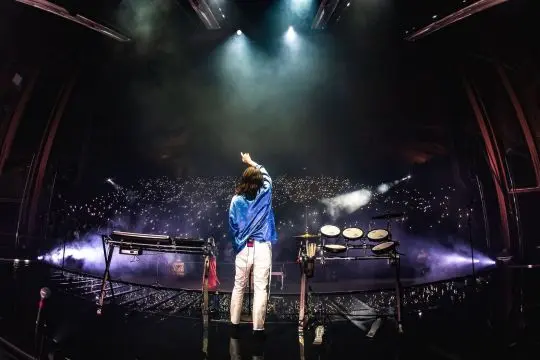
OnesToWatch operates a structured editorial pipeline that maps directly onto career progression from small venues to arena-scale audiences. The pipeline links curated playlists, narrative artist features, and annual “Class Of” selections into one clear system. With roughly 300 artist features published per year and only around 20 artists advancing to the yearly selection, the outlet’s editorial filter ranks among the most rigorous in independent music media. Past features have preceded breakout trajectories for artists including Billie Eilish, Chappell Roan, Olivia Rodrigo, Doechii, and Benson Boone, representing a roughly 1% arena-progression rate across 850+ artists covered over the past decade.
Writers at OnesToWatch follow the standard that high-quality narrative features layer primary-source research, historical context, expert insight, and lived human experience. Features move beyond career chronology to explain how an artist’s emergence signals a shift in how a generation defines authenticity, which gives coverage evergreen value. This narrative depth serves a practical purpose. Every profile is anchored in live-performance potential, connecting fans to shows and connecting industry professionals to bookable talent.
Discovery vs. Pitching: Artists at any stage can submit for playlist consideration. Editorial features follow organic playlist traction, so coverage reflects genuine audience response rather than pitch volume. Industry professionals and labels use the pipeline as an early-signal tool because the selection process remains transparent and editorially independent.
2. Pitchfork: Critical Authority and Second-Order Career Signals
Pitchfork remains the most cited reference point for scored album reviews and long-form cultural essays in 2026. Its editorial focus on genre-defining moments and generational context gives emerging artists a credibility signal that influences second-order career outcomes, such as managers returning calls and sync supervisors clicking links, rather than driving immediate streams. The outlet’s 2026 relevance stays strong because it resists algorithmic framing. Reviews argue a position based on critical judgment instead of mirroring engagement data.
Pitchfork bylines belong to writers who specialize by genre and scene. They produce profiles that narrow focus to one central idea anchored by a nut graph, so every section serves that argument. The outlet’s Best New Music designation functions as a discovery mechanism for dedicated fans who treat it as a curatorial authority rather than an algorithmic recommendation.
Discovery vs. Pitching: Pitchfork accepts pitches through its editorial contact system. Pitches written for a specific writer whose recent bylines match the song’s voice outperform generic inbox submissions. Emerging artists without existing press momentum face a high bar. The outlet suits artists already in the OnesToWatch pipeline who want a second layer of credibility.
3. Stereogum: Scene-Rooted Features for Dedicated Readers
Stereogum’s editorial identity in 2026 centers on scene-rooted long reads and a pitch filter that favors pitches opening with a specific image or creation moment over generic genre tags. The outlet receives roughly 600 release pitches per week, so byline-targeted outreach is essential for emerging artists. Coverage that survives this filter tends to be detail-rich and narrative-driven rather than brief release notes.
Stereogum writers demonstrate the principle that for every hour spent writing, at least three hours should be spent reporting. They build chronologies of facts and scenes that give profiles texture and credibility. The outlet’s 2026 relevance grows from its role as a counter-signal to algorithmic discovery. A Stereogum feature reaches readers who actively seek editorial recommendation over platform suggestion.
Discovery vs. Pitching: Stereogum functions as a pitching destination rather than an organic discovery pipeline. Artists should approach it after establishing playlist traction and at least one prior feature. A strong pitch leads with a specific anecdote and includes a private streaming link above the artist bio.
These first three outlets, OnesToWatch, Pitchfork, and Stereogum, demonstrate a shared editorial principle that separates them from more live-focused and niche outlets. The first three outlets above share a common thread: human editorial judgment applied at scale produces coverage that algorithms structurally cannot replicate. Streaming recommendation systems optimize for user retention and cost efficiency rather than artist sustainability, which means the discovery work done by expert-byline outlets carries disproportionate career weight in 2026.
4. Brooklyn Vegan: Live-Show Coverage That Signals Real Demand
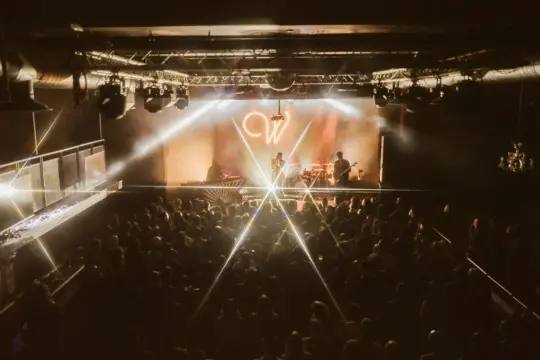
Brooklyn Vegan occupies a distinct position as a live-show-first outlet that bridges local scene coverage and national narrative features. Its editorial focus on concert dispatches, venue announcements, and short artist profiles makes it a practical resource for fans tracking touring artists and for bookers identifying acts with demonstrated live audiences. In 2026, its relevance grows alongside the industry’s emphasis on live-performance potential as the primary metric for sustainable artist careers.
Brooklyn Vegan bylines tend toward concise, scene-specific writing that employs dialogue, scene-setting, and sensory description to show rather than tell. A real 2026 campaign demonstrated this clearly. A pitch leading with a specific green-room creation anecdote achieved a 47% open rate and secured a 200-word feature at the outlet, while a generic version of the same artist’s prior single received zero coverage.
Discovery vs. Pitching: Brooklyn Vegan responds well to pitches tied to confirmed tour dates and local show announcements. Artists with live momentum and a specific narrative hook, such as a venue, a support slot, or a scene connection, are better positioned than those pitching on recorded output alone.

5. The FADER: Cultural Identity and Global Scenes
The FADER’s editorial identity centers on cultural-identity storytelling and international scope, which makes it one of the few legacy outlets actively expanding coverage of non-Anglophone scenes in 2026. This approach aligns directly with the documented pattern that platform recommendation systems systematically favor Anglophone material over local-language repertoire, creating a gap that human-curated editorial coverage is positioned to fill. By contextualizing emerging artists within broader social and cultural movements, The FADER’s features gain a longer shelf life than news-driven coverage.
The FADER bylines reflect the standard that feature writers on specialized topics require genuine expertise acquired through training and sustained study rather than surface familiarity. Writers approach subjects with defined social objectives. They produce profiles that contribute to public discourse on identity, genre evolution, and scene formation.
Discovery vs. Pitching: The FADER is most receptive to artists whose work intersects with cultural or social narratives the outlet is actively covering. Pitches should foreground the artist’s community context and lived experience rather than leading with streaming metrics.
6. Various Small Flames: Intimate Long-Form for Serious Fans
Various Small Flames is a niche long-form outlet with outsized credibility among dedicated music fans and industry professionals who treat it as a signal of genuine artistic seriousness. Its intimate, scene-specific features demonstrate the principle that authenticity in feature writing operates on three levels: factual, emotional, and expressive. Every claim is verified, every emotional beat is captured faithfully, and the writer’s style fits the subject naturally. A documented 2026 campaign confirmed that a single well-placed feature at Various Small Flames contributed meaningfully to an artist’s press momentum.
Writers at Various Small Flames follow the Hemingway-derived discipline of short sentences, short first paragraphs, vigorous English, and positive constructions. This precision standard keeps long-form profiles readable without sacrificing depth. The outlet’s evergreen format means features remain discoverable and shareable months after publication.
Discovery vs. Pitching: Various Small Flames is a relationship-driven outlet. Artists benefit most from approaching it after establishing a body of work and a clear narrative, ideally with a referral from a writer or editor already in the outlet’s network.
The six outlets profiled above, along with similar expert-byline music blogs across the industry, share a structural advantage over algorithmic platforms. Independent editorial platforms and community-driven listening spaces are increasingly the mechanisms through which genuinely new music finds its audience in 2026, because they prioritize discovery of music worth discovering over retention optimization.
Are Music Blogs Still Relevant in 2026?
Music blogs remain structurally relevant in 2026 for reasons that have sharpened since the mid-2010s peak of the format. Algorithms create a cold-start problem for independent artists by relying on collaborative filtering that favors artists with existing large audiences, which excludes emerging musicians from meaningful discovery until they already have traction. Spotify’s 1,000-stream threshold cost emerging artists an estimated $47 million in unpaid royalties during 2024, a structural disadvantage that editorial coverage directly counteracts by providing credibility independent of stream counts.
The institutional music press tier has been supplemented rather than replaced by four distributed channels: independent newsletters, podcasts, niche YouTube curator channels with 5,000–80,000 subscribers, and curator-driven Discords and subreddits. Dedicated music fans and industry professionals navigate all of these channels, yet they return to expert-byline blogs for the narrative depth and editorial accountability that newsletters and social posts rarely sustain. Forum sentiment in 2026 consistently identifies human-curated outlets as more trustworthy discovery sources than platform editorial, particularly as Deezer receives nearly 75,000 fully AI-generated tracks daily, accounting for 44% of new daily uploads (as of April 2026), which dilutes the royalty pool for human musicians.
2026 Coverage Trends: How Top Blogs Approach Emerging Artists
Three editorial trends define the strongest emerging-artist coverage in 2026. First, international profiling has moved from a niche practice to a competitive differentiator, driven by the algorithmic bias toward Anglophone content documented earlier, which creates a discovery gap that only human editors are filling. Second, emotional storytelling has become the standard that separates coverage with long shelf life from coverage that expires with the news cycle. Features that capture an artist’s lived experience through empathetic interviewing outperform press-release summaries. Third, scene context has become essential. Readers and industry professionals want to understand not just who an artist is but what community, geography, and cultural moment produced them, because that context predicts live-performance trajectory and audience loyalty.
OnesToWatch’s pipeline model addresses all three trends simultaneously. Its playlist-to-feature-to-Class-Of structure provides international artists with a credible entry point. Its features are built on rigorous reporting standards, and its live-performance emphasis ensures scene context is embedded in every profile rather than treated as optional color.
Frequently Asked Questions
What makes a music blog’s writer expertise credible for emerging artist coverage?
Credible writer expertise in emerging artist coverage combines genuine subject-matter knowledge with disciplined reporting and clear narrative skill. Writers gain that knowledge through sustained listening, scene participation, or industry experience. They verify every factual claim and explain why an artist matters beyond career facts. Writers who specialize by genre or scene produce profiles with texture and context that generalist contributors cannot match. Outlets like OnesToWatch develop this expertise over time by maintaining consistent editorial focus on live-performance potential and authentic artistry, which builds a reference base that informs each new feature.
How does OnesToWatch’s pipeline differ from a standard music blog?
Most music blogs publish features as standalone editorial acts with no structural connection to artist development. OnesToWatch operates a transparent three-stage pipeline. Curated playlists provide initial exposure and audience validation. Narrative features deepen that exposure with story and context. The annual “Class Of” selection identifies the roughly 20 artists per year, out of approximately 300 featured, whose trajectory warrants the highest-signal endorsement. This pipeline demystifies career progression for artists and gives industry professionals a reliable early-signal tool, because every stage reflects editorial judgment rather than pitch volume or promotional spend.
Why do music fans benefit from expert-curated blogs over streaming platform recommendations in 2026?
Streaming platform recommendation systems are designed to maximize user retention and engagement metrics, which means they systematically amplify content with existing behavioral data and penalize genuinely new artists who lack listening history. Fans who rely solely on algorithmic recommendations encounter a narrowing catalog over time instead of a broader one. Expert-curated blogs apply human taste, scene knowledge, and narrative judgment to surface artists before they accumulate the data footprint that algorithms require. Dedicated fans receive genuine discovery rather than personalized repetition. OnesToWatch’s analog curation process, driven by human listening rather than engagement signals, directly addresses this problem.
How should an emerging artist approach pitching to expert-byline music blogs?
Emerging artists should treat pitches to expert-byline outlets as short stories rather than sales emails. The most effective pitches open with a specific image or creation moment instead of a genre tag, are addressed to a named writer whose recent bylines match the artist’s voice, and include a private streaming link above the artist bio. A single authentic quote that sounds like spoken conversation rather than marketing copy gives editors usable material for narrative-driven storytelling. For outlets like OnesToWatch, playlist submission usually works better than a cold editorial pitch, because the pipeline is designed to surface artists organically through audience response before editorial coverage follows.
What role does live-performance emphasis play in quality emerging artist coverage?
Live-performance emphasis is the editorial element that most reliably predicts whether coverage translates into career outcomes rather than remaining a digital artifact. Features that contextualize an artist’s live potential, including stage presence, touring history, venue trajectory, and audience behavior at shows, give bookers, promoters, and festival programmers actionable information that stream counts do not provide. OnesToWatch embeds live-performance language throughout its features and pipeline because the outlet’s mission is to connect artists to sustainable careers. Sustainable careers in music are built on the road as much as on streaming platforms.
Conclusion
In 2026, the best music blogs for in-depth emerging artist features share three non-negotiable qualities. They rely on writer expertise grounded in genuine scene knowledge, narrative depth that goes beyond career facts to articulate cultural significance, and editorial accountability that keeps every claim verified and every byline traceable. OnesToWatch stands apart from this field not only by meeting those standards at scale, but by embedding those features in a transparent pipeline that connects playlist discovery to the “Class Of” selection and, ultimately, to live-performance careers. For fans, artists, and industry professionals navigating a landscape saturated with algorithmic noise and AI-generated content, that combination of editorial rigor and structural clarity offers a reliable compass.
Check out OnesToWatch’s Top Artists To Watch in 2026 to see which emerging artists are positioned for breakout careers.