
Last updated: September 22, 2026
Key Takeaways
- Music curation services fall into three distinct categories: B2B background music, artist pitch platforms, and personal concierge tools. Choosing the wrong one wastes budget.
- Businesses need commercial public-performance licensing. Artists need guaranteed curator feedback. Listeners need human-guided or AI-assisted recommendations that learn taste over time.
- SubmitHub, Groover, Playlist Push, and SubmitLink dominate artist-facing pitching, while Soundtrack Your Brand, Curator Now, and Mood Media lead B2B sonic branding.
- Spotify’s 2026 Claude integration and human concierge services like Debop and Slipstream give listeners discovery options beyond familiar algorithmic playlists.
- OnesToWatch acts as a discovery-and-validation layer for businesses, artists, and fans across all three categories.
Explore OnesToWatch For Exclusive Artist Discovery And In-Depth Coverage
How To Choose The Right Music Curation Service
Your role and goal decide which music curation service makes sense. The market splits into three categories, and treating them as one creates confusion and wasted spend.
- Start with the legal question if you run a physical venue or retail chain. A consumer Spotify subscription does not cover public performance. You need commercial public-performance licensing, which is a legal requirement.
- Independent artists need a pitch platform that guarantees curator feedback. The curator still decides whether to place the track.
- Listeners who want personal recommendations need a concierge or algorithmic tool that learns taste beyond passive listening history. Artist submission platforms serve creators, not listeners.
The sections below route each buyer type to the right category with named vendors, sourced pricing, and clear selection criteria.
Discover Your Next Favorite Artist And The Story Behind Their Rise On OnesToWatch
Category 1: B2B Background Music And Sonic Branding For Venues
Businesses that play music for customers in a physical space, such as restaurants, retail stores, hotels, and gyms, require commercial public-performance licensing. A personal Spotify or Apple Music account does not include this coverage, and playing music without it exposes a venue to licensing liability.
The main vendors in this space operate on a per-zone, per-month subscription model. Key options include:
- Soundtrack Your Brand publishes three pricing tiers billed per zone, from about $29 per zone per month on annual billing, with no setup fee and no minimum contract. For ordinary background play in the United States, ASCAP, BMI, and GMR are included. In the UK, public-performance rights are not included, so most venues still need TheMusicLicence from PPL PRS on top of the subscription.
- Curator Now (Activaire) publishes a starting price of $35 per zone per month for its Basic plan, includes U.S. and Canada commercial performance licensing covering ASCAP, BMI, SESAC, and GMR, and offers a 14-day free trial with no credit card required. Its Enterprise plan covers an entire multi-location portfolio under a single commercial license with no per-location caps.
- Mood Media operates as a managed, quote-led provider with no public self-serve price. Buyers should request the package, hardware, support, and licensing route in writing before comparing it against self-serve apps.
- Altaura is a managed sonic-branding service for brands that want custom-built sound identities rather than off-the-shelf playlist programs.
Multi-location operators should confirm in writing whether a subscription covers ASCAP, BMI, SESAC, and GMR for U.S. venues, or whether TheMusicLicence from PPL PRS is still required for UK premises. Curator Now’s Enterprise plan illustrates the fleet model: a 20-location restaurant group can build brand-approved scene libraries and daypart schedules from a single dashboard, with per-location control available when needed.
Category 2: Artist Pitch Platforms For Independent Releases
Artist-facing pitch platforms charge for guaranteed curator consideration rather than guaranteed placement. A curator must listen and respond, or the artist’s credits are refunded, and the curator always controls the placement decision.
The table below compares SubmitHub and Groover, which share similar per-submission pricing and response guarantees. Playlist Push and SubmitLink use different pricing models and appear in the paragraphs that follow.
| Platform | Cost Per Submission | Response Guarantee | Curator Network Size |
|---|---|---|---|
| SubmitHub | $0.80–$3.00 Per Premium Credit | 72 Hours | 6,000+ Curators |
| Groover | €2 Per Submission (2 Grooviz At €1 Each) | 7 Days | 3,000+ Curators |
Those numbers only tell part of the story. The more meaningful difference lies in how each platform enforces its response guarantee and where their networks are strongest.
SubmitHub Vs. Groover: The Core Difference. SubmitHub extended its premium submission response guarantee to 72 hours in a 2026 policy change. Curators must listen for at least 20 seconds and leave at least 10 words of feedback if they decline. It is also the larger network by curator count. Groover’s 7-day window is consistently enforced, with automatic credit refunds if a curator does not reply, and its network is stronger for European and Latin American curator relationships. SubmitHub tends to work better for blog coverage, while Groover fits artists targeting markets outside North America.
For high-intent comparison searchers evaluating SubmitHub alternatives, Playlist Push’s published minimum Spotify campaign budget is $285 (with some sources citing a $280 minimum) and it publishes a self-reported 32% average acceptance rate. SubmitLink reports 36,000+ artists, 900+ active curators, and a 29.6% average share rate.
SubmitLink’s analysis of 17,353 playlist campaign and direct-pitch records from January through July 2026 found AI-involved music fell from 35.6% to 19.8% of campaign submissions, appeared more often in free promotion, and earned lower curator acceptance than non-AI music. SubmitHub’s policy on AI music is determined by individual curators, so artists should check curator policies before submitting AI-generated tracks.
See Which Emerging Artists Curators Are Backing In 2026
Category 3: Personal And Concierge Curation For Listeners
Personal curation services focus on listeners who want a guide, not just another passive playlist. These listeners feel stuck in algorithmic loops and want a real sense of discovery.
On the algorithmic side, Spotify has moved well beyond passive listening-history inference. Spotify launched its Claude integration on April 23, 2026, allowing both Free and Premium users to connect their accounts to Anthropic’s Claude AI assistant for personalized music and podcast recommendations based on their taste and listening history. Spotify’s Prompted Playlist feature also expanded to include podcasts in April 2026, extending natural-language playlist generation beyond music to spoken-word content discovery. Spotify’s July 2026 update to Release Radar introduced session controls letting listeners narrow the playlist to a specific genre, focus exclusively on new-to-you artists, or apply other personalized filters.
Human services like Debop and Slipstream occupy a different position. Algorithmic tools optimize for engagement and familiarity. A human concierge builds a taste profile over time through direct conversation and deliberate listening. The difference is that one surfaces more of what you already play, while the other challenges what you think you like. For listeners who have exhausted algorithmic discovery, that contrast defines the value.
OnesToWatch: A Shared Discovery Layer For Brands, Artists, And Fans
OnesToWatch acts as a discovery-and-validation layer that serves all three buyer types at once.
For businesses and brands, OnesToWatch helps identify authentic emerging artists with real live-performance potential before they break. The platform’s editorial track record, featuring Taylor Swift, Billie Eilish, Chappell Roan, Charli XCX, Doechii, and Olivia Rodrigo before mainstream recognition, gives brands a sourced, credible signal for which artists are worth associating with early.
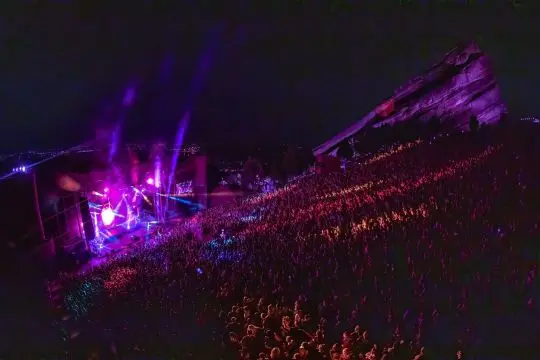
For independent artists, OnesToWatch functions as a structured career pipeline. It offers curated playlists built through human listening, editorial features that cover around 300 artists per year, and yearly “Class Of” selections that spotlight emerging artists and help move their careers toward touring. That pipeline clarifies career progression in a way a single playlist pitch platform cannot.

For music fans, OnesToWatch delivers human-curated discovery that feels fresher than algorithmic repetition. Every playlist and feature reflects editorial judgment, which means the artists surfaced appear because they are genuinely worth hearing.
Browse OnesToWatch’s Editorial Picks For 2026
Buyer’s Checklist: How To Vet A Music Curation Service
Use this checklist before signing a contract or spending credits with any music curation service.
- Licensing Compliance: Confirm in writing whether the service includes ASCAP, BMI, SESAC, and GMR coverage for U.S. venues, or whether you need TheMusicLicence from PPL PRS in the UK. Curator Now (Activaire) includes all four U.S. and Canada performance licenses with every plan. Soundtrack Your Brand does not include UK public-performance rights.
- Curator Vetting: Check the playlist’s follower-to-listener ratio (healthy is 1:3 to 1:5), average streams per track on the playlist (check the last 10 songs added), and whether the curator has a verifiable footprint outside Spotify, such as an Instagram, blog, or submission page. If the only trace is the playlist itself plus a Gmail address, treat the curator as unverified.
- Response Guarantees: SubmitHub guarantees a response within 72 hours on premium submissions as of its 2026 policy change (previously 48 hours). Groover guarantees a response within 7 days. Playlist Push credits the account back if a curator does not review a track within 14 days.
- Spotting Pay-For-Placement Schemes: A legitimate curator never needs a Spotify for Artists login or distributor account access. A refusal to name the playlists, curators, or promotion methods before payment is a warning sign. Any service guaranteeing a specific number of streams, playlist adds, or followers is either using bots or misrepresenting results.
Conclusion: Match The Service To The Job
The term “music curation services” covers three very different needs, and misalignment between need and service drives most wasted spend. A restaurant group that buys a playlist-pitch platform still has no licensing coverage. An independent artist who buys a B2B background-music subscription still has no curator feedback. A listener who relies entirely on a passive algorithm still has no human judgment.
OnesToWatch provides a discovery-and-validation layer that supports all three buyer types without forcing them into a single lane. Businesses get a sourced, credible pipeline for identifying authentic emerging artists before they break. Independent artists get a structured editorial pathway, including playlists, features, and yearly selections, that helps move careers from emerging to touring. Fans get human-curated discovery that algorithmic systems struggle to match.
Start With The 30 Artists Shaping 2026 On OnesToWatch