
Written by: Kai Eldridge, Music Discovery Editor, OnesToWatch
Key Takeaways
- Sea.Hear.Now blends surf culture, live music, and coastal community in Asbury Park, giving brands focused access to a hard-to-reach 21–45 audience.
- The festival’s tiered partnership model centers on experiential, sustainability, and artist-adjacent activations instead of simple logo placement.
- Five sponsor verticals in 2026 – alcohol, apparel, surf/outdoor, tech, and sustainability – rely on clear outcomes such as samples distributed, leads generated, and user-generated content volume.
- High-performing activations feature branded lounges, sampling bars, interactive installations, and artist collaborations that deliver 3–5× higher brand recall than traditional advertising.
- Brands that want emerging-artist integrations can use OnesToWatch talent and editorial reach to extend impact before, during, and after the festival.
Sea.Hear.Now’s Tiered Brand-Partnership Model
Sea.Hear.Now is produced by C3 Presents along with locals Danny Clinch and Tim Donnelly, the Austin-based live-entertainment company behind Lollapalooza and Austin City Limits Music Festival. All brand sponsorship inquiries run through C3 Presents’ official sponsorship inquiry form, which acts as the single entry point for prospective partners across categories and budget tiers.
The partnership model uses a tiered structure built around experiential, sustainability, and artist-adjacent activations instead of logo placement alone. Sponsors now receive packages defined by experiences, access, and activation footprints, with outcomes such as qualified leads, brand awareness, and engagement metrics forming the basis of post-event reporting. Value-in-kind arrangements, including goods, services, or local business contributions, can offset real event costs for brands with non-cash assets to contribute.
Five Sponsor Verticals That Win at Sea.Hear.Now
Sea.Hear.Now’s surf-and-music positioning attracts partners across five primary verticals, even though C3 Presents does not publish a full sponsor roster ahead of each event. Understanding which activation formats and measurable outcomes align with each vertical helps brands choose the right entry point and set realistic performance benchmarks. The table below maps the five core sponsor categories to typical activation mechanics and the metrics used to evaluate success.
| Vertical | Representative Sponsor Type | 2025–2026 Activation Category | Measurable Outcome |
|---|---|---|---|
| Alcohol | Craft beer / spirits brand | Branded sampling bar, lounge seating, co-branded glassware | Samples distributed, dwell time, UGC volume |
| Apparel | Surf or streetwear label | Customization station, artist-adjacent merch collab, photo moment | Units customized, social impressions, email captures |
| Surf / Outdoor | Board, wetsuit, or sunscreen brand | Demo zone, athlete meet-and-greet, product sampling | Demo participants, leads generated, brand recall lift |
| Tech / Connectivity | Mobile carrier or device brand | Charging station, Wi-Fi sponsorship, interactive installation | Device interactions, app downloads, CRM attribution |
| Sustainability | Environmental nonprofit or eco-brand | Beach cleanup activation, reusable cup program, pledge wall | Pledges collected, waste diverted, press mentions |
Sustainability activations carry particular weight at Sea.Hear.Now because of the festival’s coastal setting and the crowd’s alignment with ocean-health causes. Partners such as the Surfrider Foundation represent the type of mission-driven co-branding that resonates strongly with this audience. Understanding who makes up that audience, and how closely it matches your target customer, becomes the next step in evaluating partnership fit.
Sea.Hear.Now Audience Profile and Brand Fit Checklist
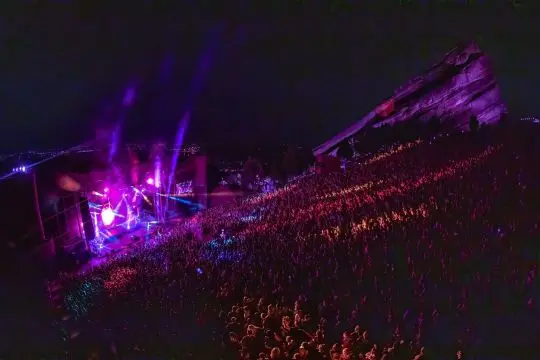
Sea.Hear.Now draws a coastal-lifestyle audience concentrated in the 21–45 age range, with strong representation from the New York–New Jersey metro area. Attendees skew toward active music discovery: they follow emerging artists, attend multiple festivals per year, and make purchasing decisions shaped by live experiences. 74% of festival attendees say they are more likely to purchase a product they first tried at a music festival, which makes the on-site activation window commercially significant.
Before committing budget to a Sea.Hear.Now partnership, brands should confirm that their product, audience, and activation capabilities match what this festival rewards. The following checklist helps brands assess fit before committing budget.
- Your target customer is 21–45, values authenticity, and engages with live music or surf culture.
- Your brand can deliver a tactile, participatory experience rather than passive logo exposure.
- You have a sustainability story or can credibly align with ocean or environmental messaging.
- Your product or service benefits from trial, sampling, or hands-on demonstration.
- You can support social amplification with creator-ready visual assets and on-site content moments.
Brands that check three or more of these boxes have a strong audience-fit case to build a pitch around.
High-Impact Activations and ROI Measurement at Sea.Hear.Now
Effective activations at surf-and-music festivals move well beyond banner placement. The 2026 festival season has confirmed a broad industry shift from logo-heavy sponsor walls to immersive experiential activations, including phone-free zones, analog craft experiences, wellness spaces, and customization stations that encourage participation and content creation.
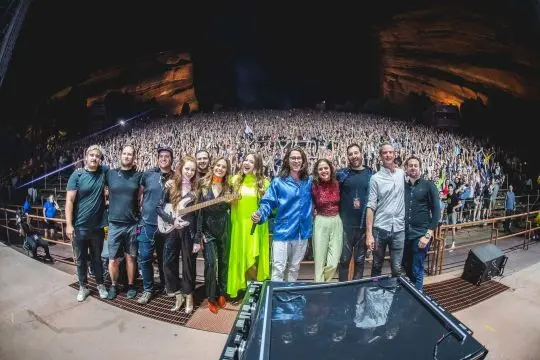
At Sea.Hear.Now’s scale and audience profile, five activation formats consistently outperform others in generating measurable engagement and content.
- Branded lounges and shade structures, which solve attendee problems such as shade, seating, and phone charging, draw the most foot traffic.
- Product sampling bars should plan for 1,500–3,000 samples per sampling team per day, with permits requiring 8–10 weeks of advance approval.
- Interactive installations and photo moments generate dwell time and user-generated content that extends reach beyond the festival footprint.
- Artist-adjacent collaborations create authentic association and earned media through co-branded content with performing or emerging artists.
- Playlist and streaming integrations keep the brand present in the discovery phase through pre- and post-festival playlist placements.
On ROI measurement, sponsorship measurement is shifting from legacy CPM and impression-based pricing toward cost-per-relationship and conversion-oriented metrics. Standard modern metrics include cost per interaction, engaged time, CRM attribution, and conversion influence. A post-event recap that covers reach, engagement, activation traffic, and measurable results is now the expected deliverable from the festival to the sponsor. A $50,000 sponsorship that influences $200,000 in pipeline reflects a 4:1 ROI, while high-performing packages generate 8–12x multiples.
Music festival brand activations achieve 3 to 5 times higher brand recall compared to traditional advertising, which makes the medium defensible in internal budget reviews. Check out OnesToWatch’s Top Artists To Watch in 2026 for a curated shortlist of emerging talent whose live performance trajectory and audience demographics map directly to the Sea.Hear.Now crowd.
Step-by-Step Guide to Pitching a Sea.Hear.Now Sponsorship
The workflow below reflects the standard process for securing a festival sponsorship at a C3 Presents managed event, based on established festival sponsorship best practices.
- Submit the official inquiry. All Sea.Hear.Now sponsorship inquiries begin at the C3 Presents sponsorship form, which serves as the only confirmed contact path for prospective partners.
- Prepare a one-page proposal. The pitch should include your audience demographics, specific deliverables, pricing or tiered options, brand-fit rationale, and proof of traction such as sales data, social reach, or prior festival activation results.
- Define your activation concept. Proposals that lead with a specific experiential concept and measurable outcomes outperform generic reach-based pitches. Clearly state which attendee problem your activation solves.
- Establish your budget range. Tier 3 regional festivals (20K–50K attendees) carry official sponsorship costs of $15K–$75K, adjacent activations from $8K–$30K, and street-team-only budgets from $5K–$15K. Allocate at least 30–40% of total budget to the on-site experience, staffing, content, and giveaways rather than the sponsorship fee alone.
- Time your outreach correctly. Your budget allocation directly affects how early you need to start planning. Begin activation planning 4–6 months before the festival to secure permits, finalize production, and recruit staff, since the 30–40% experiential budget mentioned above requires that lead time to execute properly. For annual sponsorships, outreach should start 3–6 months ahead to align with corporate budget planning cycles.
- Follow up with a renewal conversation early. Open renewal discussions before the next sponsor budget cycle closes, and use the post-event recap as the anchor document.
Sponsorship packages should be priced at 70–80% of the calculated total value of all deliverables. This range gives the brand a perceived deal while still protecting the festival’s revenue floor. One way to increase that total value, and to stand out from competing sponsors, is to integrate emerging artist partnerships that extend your reach beyond the festival footprint.
Partnering With Emerging Artists Through OnesToWatch
OnesToWatch has spent over a decade identifying emerging artists before mainstream recognition, with alumni including Billie Eilish, Chappell Roan, Olivia Rodrigo, and Post Malone. The platform covers roughly 300 artists per year through editorial features and curated playlists, with a small selection elevated to the annual “Class Of” designation, which signals sustained career trajectory.
For brands activating at Sea.Hear.Now, layering OnesToWatch curated talent into a sponsorship creates three clear advantages.
- Authenticity. Emerging artists carry credibility with music-discovery audiences that established headliners often lack, so an activation co-created with a rising artist feels earned rather than purchased.
- Content depth. Artist collaborations generate pre-festival, on-site, and post-festival content across editorial, social, and streaming channels, which extends the activation’s media life well beyond the event weekend.
- Audience alignment. OnesToWatch’s audience skews toward active music discoverers aged 18–35 who attend live events and influence peer purchasing decisions, which overlaps directly with Sea.Hear.Now’s core demographic.
Practical integration formats include co-branded playlist releases timed to the festival announcement, artist appearances within a branded lounge or activation footprint, and post-event editorial features that document the brand’s role in supporting emerging music. These formats are measurable through streaming data, social engagement, and on-site interaction counts.
The Top Artists To Watch list mentioned earlier provides a direct route to identifying and approaching artists whose audience demographics align with Sea.Hear.Now’s core attendee profile. Connect with the OnesToWatch editorial team to explore artist partnership opportunities for your 2026 activation.
Sea.Hear.Now Festival Brand Partnerships FAQ
How much does it cost to sponsor Sea.Hear.Now?
C3 Presents does not publish a public rate card for Sea.Hear.Now sponsorships. Based on comparable regional festival structures, official sponsorship packages at events of this scale typically range from $15,000 to $75,000 depending on tier, with adjacent or outside-gate activations running $8,000–$30,000. Brands should also budget 30–40% of their total spend for on-site production, staffing, and giveaways rather than allocating the majority to the sponsorship fee alone.
Are category exclusivities available at Sea.Hear.Now?
Category exclusivity, which prevents competing brands in the same vertical from sponsoring the same event, is a standard feature of tiered festival sponsorship packages at the presenting and premier partner levels. Exclusivity is typically negotiated directly with C3 Presents during the proposal stage and appears in the premium pricing of top-tier packages. Brands in competitive categories such as alcohol, mobile, and apparel should raise exclusivity requirements early in the inquiry process.
Does Sea.Hear.Now have sustainability requirements for sponsors?
The festival’s coastal Asbury Park location and its audience’s strong alignment with ocean-health causes make sustainability practices a meaningful consideration for prospective partners. Brands with environmental credentials, such as reusable packaging, carbon offset programs, or nonprofit partnerships like those with the Surfrider Foundation, are better positioned to secure partnerships and to resonate with attendees. While no publicly stated mandatory sustainability requirements exist, activations that visibly contribute to environmental goals generate stronger audience engagement and press coverage.
When should brands begin the sponsorship process for Sea.Hear.Now 2027?
The renewal and new-partner outreach window for the following year’s festival typically opens immediately after the current year’s event, using the post-event recap as the starting document. For new sponsors targeting Sea.Hear.Now 2027, submitting an inquiry through the C3 Presents sponsorship form in Q4 2026 or Q1 2027 aligns with corporate budget planning cycles and maximizes the chance of securing preferred activation inventory before it is committed to returning partners.
How does integrating emerging artists improve festival activation ROI?
Artist-adjacent activations generate content and earned media that passive logo placements cannot match. When a brand co-creates an experience with an emerging artist through a playlist release, a lounge appearance, or a co-branded editorial feature, it gains pre-event, on-site, and post-event content touchpoints across streaming, social, and editorial channels. This extends the activation’s measurable reach well beyond the festival weekend and produces the kind of brand recall lift documented earlier, the 3–5× advantage that makes festival activations defensible in budget reviews. OnesToWatch’s editorial pipeline provides a direct route to identifying and approaching artists whose audience demographics align with Sea.Hear.Now’s core attendee profile.